Turbo Before Tune: Why the Order Matters on a Porsche 718
A tune asks the factory turbo to work harder. A RaggDoll turbo lets the engine breathe easier. Here's why we recommend the turbo first — and what that does to your dyno graph.
One of the biggest misconceptions in the turbocharged performance world is that tuning alone is the best first modification. Tuning absolutely adds power — but it does so by demanding more from a turbocharger that is often already operating near its efficiency limits.
The factory Porsche 718 turbochargers are designed to deliver excellent drivability, emissions compliance, fuel economy, and reliability. They achieve these goals by using relatively small turbine and compressor assemblies that provide quick spool and strong low-RPM response.
The downside? As engine speed increases, these small turbochargers begin to run out of airflow capacity.
What Happens When You Tune the Factory Turbo
To make additional power through tuning alone, boost pressure must be increased significantly. While this creates an impressive torque spike early in the RPM range, it also forces the turbocharger to work harder and generate substantially more heat.
The result is a familiar dyno graph:
- Large torque spike down low
- Rapid increase in boost pressure
- Rising intake air temperatures
- Increased exhaust backpressure
- Power falling off toward redline
In many cases, the turbocharger is simply being pushed beyond its most efficient operating range.
The RaggDoll Approach
A larger, more efficient RaggDoll Motorsports turbocharger takes a different approach. Instead of making power primarily through additional boost pressure, it makes power through increased airflow capacity and improved efficiency.
Benefits include:
- Lower compressor discharge temperatures
- Reduced exhaust backpressure
- Lower shaft speeds for a given airflow level
- Improved turbocharger efficiency
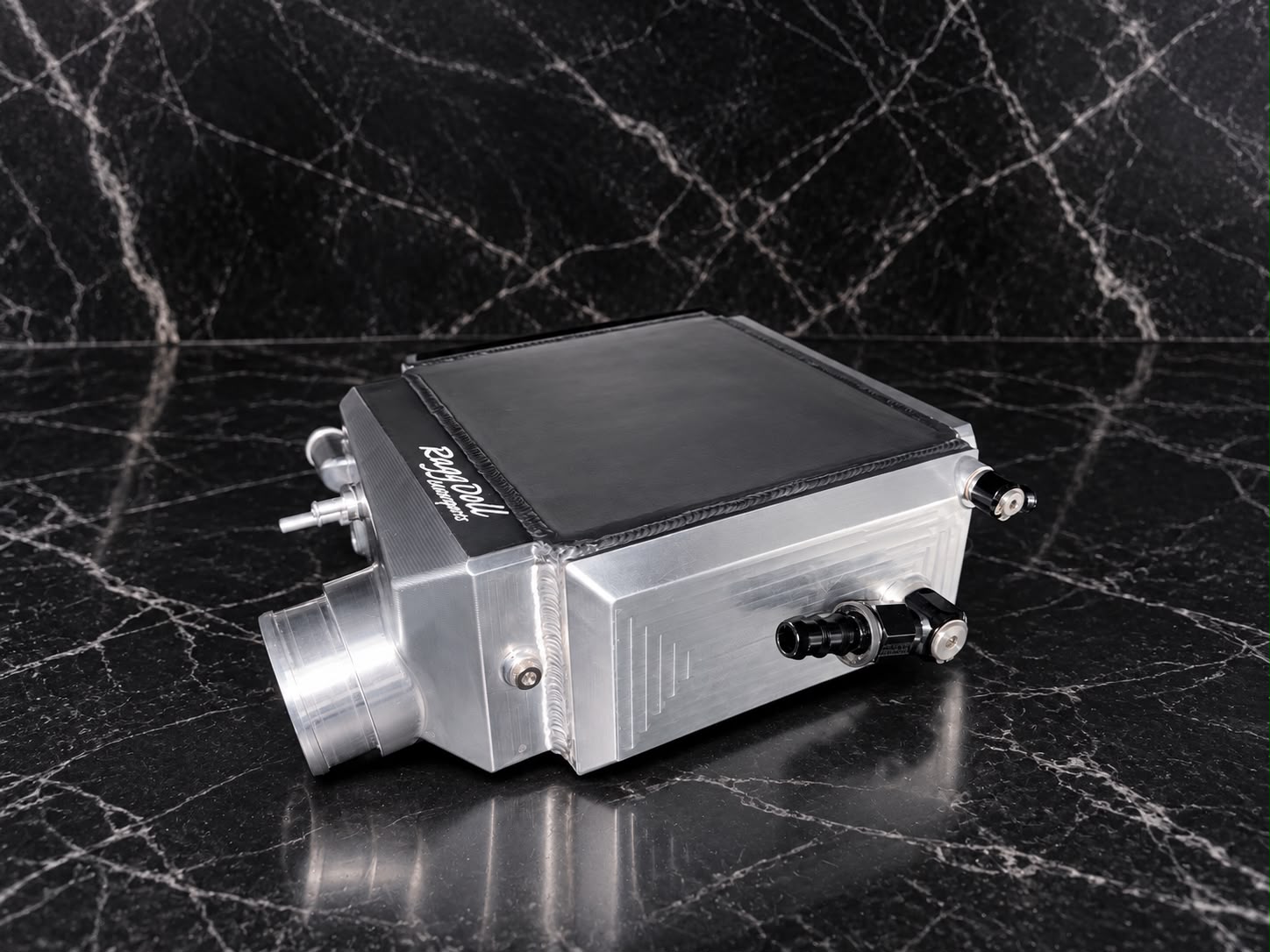
- Reduced workload on the intercooler system
- More stable intake air temperatures
- Power that carries through the entire RPM range
This is why many RaggDoll-equipped vehicles make power curves that resemble a naturally aspirated engine rather than a traditional "boost spike and drop-off" turbo car. Rather than chasing peak numbers for a brief moment, the goal is to create a broad, usable powerband that continues pulling hard to redline.
A tune asks the factory turbo to work harder. A RaggDoll turbo lets the engine breathe easier.
The Result
More power, yes — but also cooler operating temperatures, greater consistency, and significantly stronger power delivery across the entire RPM range.
That's why we recommend upgrading the turbocharger first and tuning around a more capable airflow system, rather than pushing a small factory turbocharger beyond its intended limit.